Dr. Gymbro
←

#randomized trial

4 articles
supplements

Vitamina D en alta dosis reduce el dolor de la artritis de rodilla, pero hay una trampa

BY DR. GYMBRO ·

¿Podría la solución para tus rodillas doloridas e hinchadas estar en tus análisis de sangre? En un pequeño ensayo piloto aleatorizado, pacientes con osteoartritis inflamatoria de rodilla y niveles muy bajos de vitamina D experimentaron menos dolor y rigidez, menores niveles de CRP e IL‑6 y articulaciones más tranquilas en la ecografía tras cuatro meses de un protocolo de alta dosis frente a placebo. Sin embargo, el estudio incluyó solo 30 pacientes, las dosis de carga fueron inyecciones administradas por médicos y no se observaron cambios en el cartílago ni en la estructura articular. Aquí se muestra lo que revelan los datos, a quiénes podrían aplicar y por qué deberías medir tus niveles antes de automedicarte con megadosis.
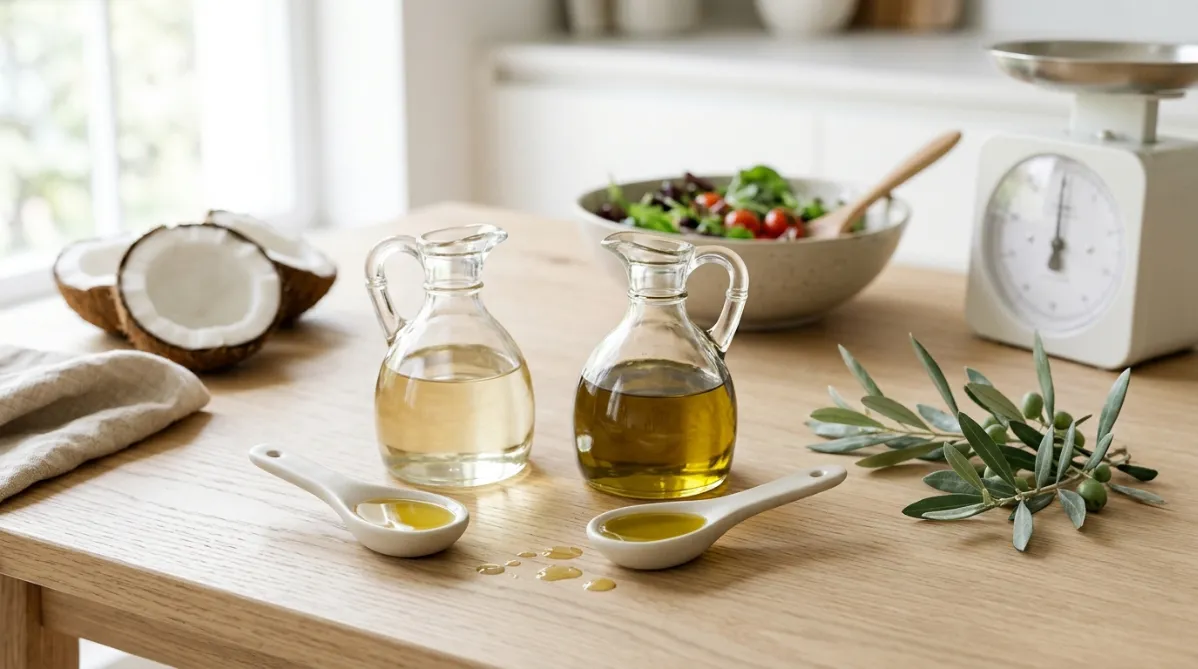
A calm, editorial-style still life shot from a slightly elevated angle, in a bright minimalist kitchen with soft natural window light coming from the left. On a pale oak wooden table sit two small glass cruets side by side: one filled with clear, pale golden MCT oil, the other with deeper green-gold extra virgin olive oil. Between and in front of them, two shallow ceramic spoons in matte off-white, each holding a glistening pour of its respective oil, with a few droplets catching the light on the table surface. A sprig of fresh olive branch with silvery-green leaves rests to the right, and a halved coconut with white flesh sits softly out of focus at the left edge, hinting at the source of MCTs. In the background, a blurred linen cloth in warm beige and a small bowl of mixed greens and cherry tomatoes suggest a healthy diet. A simple analog kitchen scale in brushed white metal sits subtly in the soft-focus background, a quiet nod to weight loss without being literal. Color palette: creamy whites, warm sand, soft sage green, and glowing golden amber highlights. Shallow depth of field, gentle shadows, delicate specular highlights on the oil, subtle film grain, clean negative space on the right third for headline overlay. Modern wellness magazine aesthetic, tactile, airy, and sophisticated, shot as if with an 85mm lens, 16:9 landscape composition.
nutrition

Aceite MCT vs Aceite de oliva en una dieta: un grupo terminó 1,7 kg más ligero

BY DR. GYMBRO ·

Un ensayo de 16 semanas comparó aceite MCT con aceite de oliva, y el grupo que usó MCT terminó aproximadamente 1,7 kg más ligero. También mostró menos grasa abdominal al final, aunque las diferencias en pérdida de grasa fueron solo tendencias. Más de un tercio de los participantes abandonó el estudio y la investigación data de 2008. Aquí se resume lo que realmente demostró, por qué los MCT podrían funcionar, cómo dosificarlos sin problemas digestivos y quién debería evitarlos.

A wide, softly lit editorial photograph of a bright, minimalist gym studio with pale oak flooring and large windows letting in diffuse morning light. In the foreground, a matte white ceramic scoop of fine white powder sits beside a simple frosted glass jar on a light concrete bench. A neutral linen towel and a stainless steel water bottle rest next to them. Slightly out of focus in the midground, a young woman in a sage-green athletic set and a young man in a soft gray tee are mid-circuit, one stepping over a low plyometric box and the other holding a kettlebell. Their motion is captured with a gentle blur. Behind them, a row of painted lines on the floor marks a shuttle-run lane, with small terracotta-colored cones spaced evenly along it. The palette is calm and modern: warm cream, sage, soft terracotta, and muted charcoal, with a touch of pale blue in the shadows. The composition uses generous negative space on the right side of the frame for a title overlay. Depth of field is shallow, the grain is subtle and film-like, and the style is contemporary lifestyle journalism, clean and crisp, with a slightly airy, high-key exposure and natural shadows. No text, no logos, no futuristic elements.
science research

Beta‑alanina aumentó la carnosina en principiantes, pero no mejoró el rendimiento

BY DR. GYMBRO ·

A los principiantes a menudo le dicen que la beta‑alanina es un atajo para mejorar el rendimiento. Un nuevo ensayo aleatorizado y controlado con placebo en adultos jóvenes sin experiencia encontró que el suplemento elevó la carnosina plasmática, pero no aportó mejoras medibles al estado físico. Seis semanas de entrenamiento en circuito, por sí solas, mejoraron significativamente el rendimiento en la carrera de ida‑y‑vuelta y el VO2máx estimado (ambos p<0.001). A continuación se resumen los hallazgos del estudio, sus limitaciones y a quién le puede resultar realmente útil la beta‑alanina.

A wide landscape editorial photograph of a minimalist wooden desk by a large window in soft morning light. On the left, two small matte ceramic bowls sit side by side on a pale oak surface. One holds a modest mound of fine white amino acid powder, and the other holds a visibly larger mound, a quiet visual echo of two different doses. Beside them rest two brushed-brass measuring spoons, one slightly larger than the other. A glass of water with delicate condensation stands nearby, catching the light.

In the middle ground, a linen-bound notebook lies open with blurred handwritten columns and a simple hand-drawn line chart. A thin pen rests across the page. A pair of clean white running shoes sits on the floor at the edge of the frame, laces loosened, suggesting a recent jog. A soft green plant, such as a eucalyptus sprig in a small ceramic vase, adds an organic touch on the right.

The background is a softly blurred bright interior with sheer curtains and a hint of a leafy city street outside. The palette is warm and muted: cream, sand, soft sage green, pale terracotta, and touches of brushed brass. Gentle diffused sunlight casts long, delicate shadows across the desk, with a shallow depth of field that keeps the bowls crisp and the rest dreamy. The mood is calm and contemplative, with a modern wellness-journal aesthetic, generous negative space at the top and right for headline overlay, and subtle film grain. Shot as if on a 50mm lens at eye level with the tabletop, with a slightly desaturated, editorial color grade.
science research

La dosis de L‑arginina que redujo la fatiga — y la que no lo hizo

BY DR. GYMBRO ·

No todas las dosis de L‑arginina son iguales. En un ensayo aleatorizado de ocho semanas con 120 adultos en edad laboral y fatigados, 6 g/día redujeron la puntuación de fatiga más que el placebo (‑6,41 vs ‑2,23) y disminuyeron el lactato después de una carrera de 30 min, mientras que 3 g/día no produjo ningún efecto sobre la fatiga. La calidad del sueño mejoró de forma nominal en ambas dosis, y el nitrito plasmático en reposo no cambió. Sin embargo, incluso la dosis ganadora sólo redujo la fatiga, no la eliminó, y el estudio contó con apoyo de la industria.

This page is available in